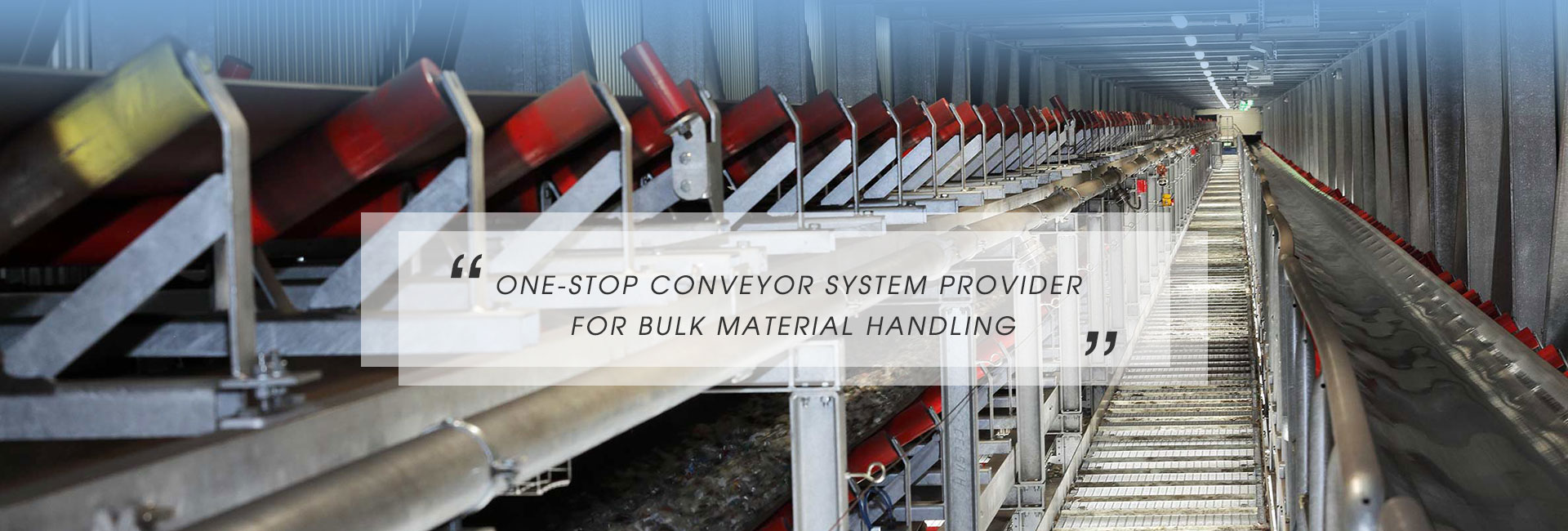
In many industries today—such as mining, agriculture, logistics, food processing, ports, and manufacturing—the Fabric Conveyor Belt has become one of the most reliable and cost-effective solutions for continuous material transportation. It offers flexibility, durability, and excellent mechanical performance, making it suitable for both light-duty and heavy-duty conveying applications. With years of engineering experience, Qingdao Quality Material Handling Co., Ltd. provides high-grade fabric belt solutions designed to meet global standards and demanding operating conditions.
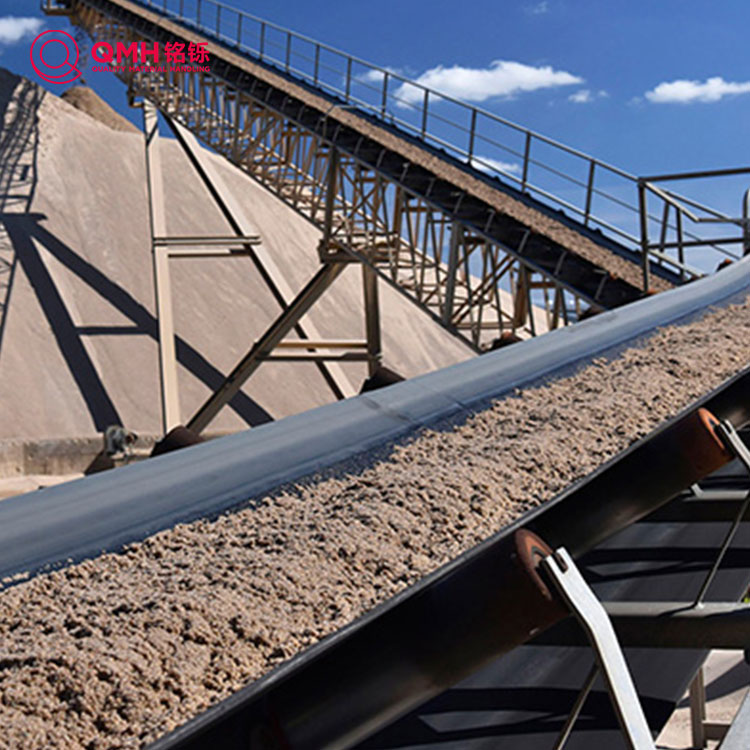
A Fabric Conveyor Belt is designed with multiple layers of synthetic fabrics, such as polyester (EP), nylon (NN), or cotton, reinforced with rubber covers. These layers deliver strong tensile strength, excellent impact resistance, and stable performance under continuous load. The belts are engineered to minimize elongation and ensure smooth conveying, making them a preferred option for high-efficiency material handling.
Outstanding flexibility for small pulley diameters
High tensile strength for long-distance conveying
Excellent abrasion resistance for extended service life
Stable belt running with minimal deformation
Cost-effective solution compared to steel-cord belts
Versatile applications across multiple industries
Product performance is closely related to its structure, cover grade, tensile rating, and material composition. To help users select the right model, the belt is typically categorized by fabric type, cover grade, thickness, and mechanical properties.
EP (Polyester/Nylon): Low elongation, high tensile strength, ideal for long distance conveying
NN (Nylon/Nylon): High impact resistance, excellent flexibility
CC (Cotton/Cotton): Stable running, suitable for shorter conveying distances
| Parameter Category | Available Options / Description |
|---|---|
| Fabric Type | EP100-EP500, NN100-NN400, CC56-CC200 |
| Ply Count | 2-10 plies depending on load requirements |
| Tensile Strength | 100–2500 N/mm |
| Cover Rubber | Grade M, MA, H, HR, OR, FR, Cold-resistant |
| Cover Thickness | Top: 3–10 mm; Bottom: 1.5–5 mm |
| Working Temperature | -30°C to +120°C depending on rubber grade |
| Width Range | 300 mm – 2200 mm |
| Elongation | ≤1.8% during operation |
| Applications | Mining, Cement, Port, Agriculture, Food, Power plants |
To accommodate different industries, Qingdao Quality Material Handling Co., Ltd. offers multiple fabric belt models.
Designed for bulk materials such as grain, coal, ore, sand, and aggregates.
Suitable for conveying materials up to 120°C or higher.
Used in food processing, chemical plants, and places with oil contamination.
Common in underground mines and power stations.
Performs well in cold regions with temperatures below −30°C.
A high-quality Fabric Conveyor Belt is widely used across dozens of industries. Its stability, tensile strength, and flexible configuration make it a universal solution.
Mining & Quarrying: Coal, ore, limestone, aggregates
Agriculture: Grain, feed, fertilizer
Cement & Construction: Sand, clinker, concrete materials
Logistics & Warehousing: Package handling, parcel sorting
Steel & Metallurgy: Coke, slag, sinter
Ports & Terminals: Bulk loading and unloading
Food Processing: Clean production with food-grade rubber covers
Choosing the appropriate belt model improves efficiency and reduces maintenance costs. Consider these key factors:
Material density and abrasiveness
Conveying distance and load volume
Operating temperature
Inclination angle of the conveyor
Belt speed and pulley diameter
Environmental conditions (oil, heat, fire, cold, water, chemicals)
Professionals at Qingdao Quality Material Handling Co., Ltd. can help evaluate equipment requirements and recommend optimal belt types.
Advanced rubber compounds and multiple fabric layers greatly reduce belt wear.
Low maintenance frequency and long service life improve cost efficiency.
Minimal elongation ensures consistent running and excellent tracking.
Ideal for loading points with heavy or sharp materials.
Flexible fabric layers reduce motor load and save power.
A Fabric Conveyor Belt is used for transporting bulk or packaged materials in mining, agriculture, logistics, cement, ports, and many other industries. Its fabric layers provide high tensile strength and flexibility, making it suitable for both light-duty and heavy-duty conveying tasks.
The lifespan depends on the material being conveyed, load capacity, operating conditions, and belt grade. High-quality belts produced by Qingdao Quality Material Handling Co., Ltd. usually offer long service life with proper maintenance and alignment.
EP belts offer low elongation, high tensile strength, stable performance, and are suitable for long-distance material handling. They are widely used in mining, cement, and industrial transportation lines.
Evaluate material density, temperature, conveyor speed, and working environment. For exact selection, contacting Qingdao Quality Material Handling Co., Ltd. for technical advice ensures the best match for your equipment.
For detailed specifications, custom design, and professional support for Fabric Conveyor Belt solutions, please contact Qingdao Quality Material Handling Co., Ltd. Our engineering team is ready to assist you in building an efficient and reliable conveying system suitable for your industry needs.


