A sidewall conveyor belt cleat is a critical component in bulk material handling systems where steep inclines, limited space, and high conveying efficiency are required. This article explains how sidewall conveyor belt cleats function, how they solve common operational challenges, and how to select the right cleat design for different industries. By understanding structure, materials, and application factors, operators can significantly reduce material spillage, downtime, and maintenance costs while improving throughput and system reliability. The article also highlights how QMH supports customized sidewall conveyor belt cleat solutions for demanding industrial environments.
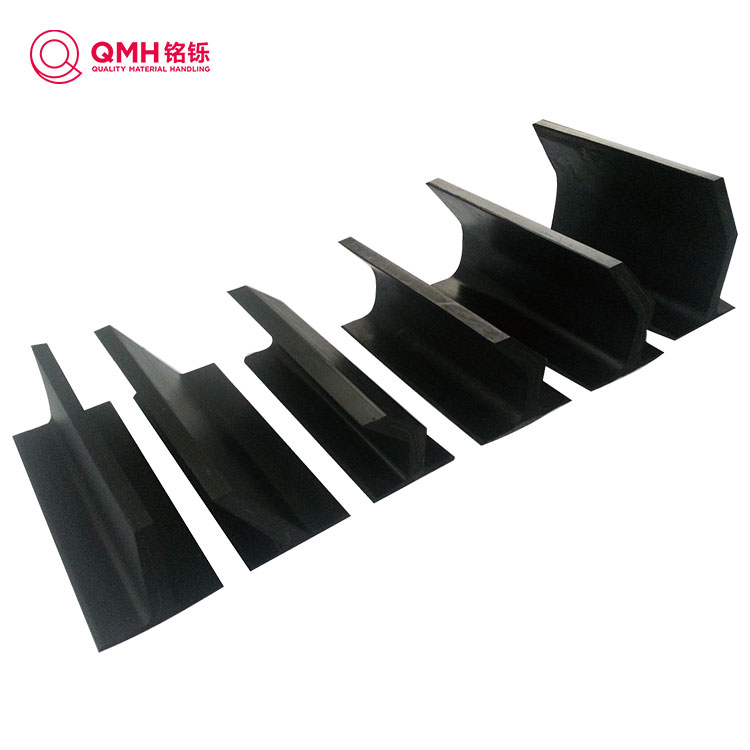
A sidewall conveyor belt cleat is designed to be integrated with corrugated sidewall belts, enabling the transport of bulk materials at steep angles or even vertically. Unlike traditional flat conveyor belts, systems with cleats and sidewalls prevent material rollback and spillage, allowing for compact system layouts and higher conveying angles.
Sidewall conveyor belt cleats are widely used in industries where space constraints and efficiency are critical. QMH develops cleat solutions that are engineered for strong adhesion, dimensional stability, and long-term operational reliability.
Customers operating conventional conveyor systems often encounter limitations when handling bulk materials on inclines. Common pain points include:
Sidewall conveyor belt cleats are specifically engineered to address these challenges by securing material flow and improving system efficiency.
A complete sidewall conveyor belt system consists of three main components: the base belt, corrugated sidewalls, and cleats. The cleats are molded or bonded perpendicular to the belt surface and act as barriers that carry material upward without slipping.
During operation, the cleats work in combination with sidewalls to form enclosed compartments. This structure allows bulk materials to be conveyed at angles up to 90 degrees while maintaining stable flow and minimizing material loss.
Implementing a sidewall conveyor belt cleat system offers several operational advantages:
These benefits translate directly into improved productivity and lower total operating costs.
Selecting the correct sidewall conveyor belt cleat requires a clear understanding of operating conditions and material characteristics. Key factors include:
QMH provides technical consultation to help customers configure cleat height, spacing, and attachment methods for optimal performance.
Sidewall conveyor belt cleats are typically manufactured from high-grade rubber or polymer compounds. Material selection directly affects wear resistance, flexibility, and service life.
Design options include straight cleats, T-cleats, and customized profiles to match specific conveying needs.
| Cleat Type | Structure | Best Use Case | Key Advantage |
|---|---|---|---|
| Straight Cleat | Simple vertical profile | Light to medium bulk materials | Cost-effective and stable |
| T-Cleat | Horizontal support wing | Heavy or loose materials | Improved material retention |
| Custom Cleat | Application-specific design | Complex conveying conditions | Maximum efficiency and control |
Sidewall conveyor belt cleats are used across a wide range of industries:
Proper maintenance significantly extends the service life of sidewall conveyor belt cleats. Recommended practices include routine inspection of cleat bonding, monitoring wear patterns, and maintaining correct belt tension.
High-quality manufacturing and material selection, such as those provided by QMH, reduce failure risks and ensure consistent performance over long operating cycles.
What conveying angle can a sidewall conveyor belt cleat handle?
Depending on material and design, conveying angles can reach up to vertical transport.
Are sidewall conveyor belt cleats customizable?
Yes. Cleat height, spacing, and material can be customized based on application requirements.
How does a cleated system reduce spillage?
Cleats and sidewalls form enclosed compartments that prevent material rollback and leakage.
Is retrofitting possible for existing conveyors?
In many cases, sidewall conveyor belt cleats can be adapted to existing systems with proper evaluation.
A sidewall conveyor belt cleat is an effective solution for overcoming steep-angle conveying challenges while improving efficiency, safety, and layout flexibility. By selecting the right cleat design and material, operators can achieve reliable material handling with reduced operational costs.
QMH specializes in high-performance sidewall conveyor belt cleat solutions tailored to demanding industrial applications. If you are looking to optimize your conveying system or need expert guidance on cleat selection and customization, contact us today to discuss your project requirements and discover how QMH can deliver dependable solutions for your operation.


