Chevron conveyor belts are essential components in modern material handling systems, particularly in industries where steep inclines and rough materials are involved. This article explores how Chevron conveyor belts improve efficiency, reduce material spillage, and increase the lifespan of conveyor systems. We will examine the design features, advantages, common applications, and selection criteria for Chevron belts. This guide aims to help businesses choose the right belt for their specific needs, reducing operational costs and improving material transport reliability.
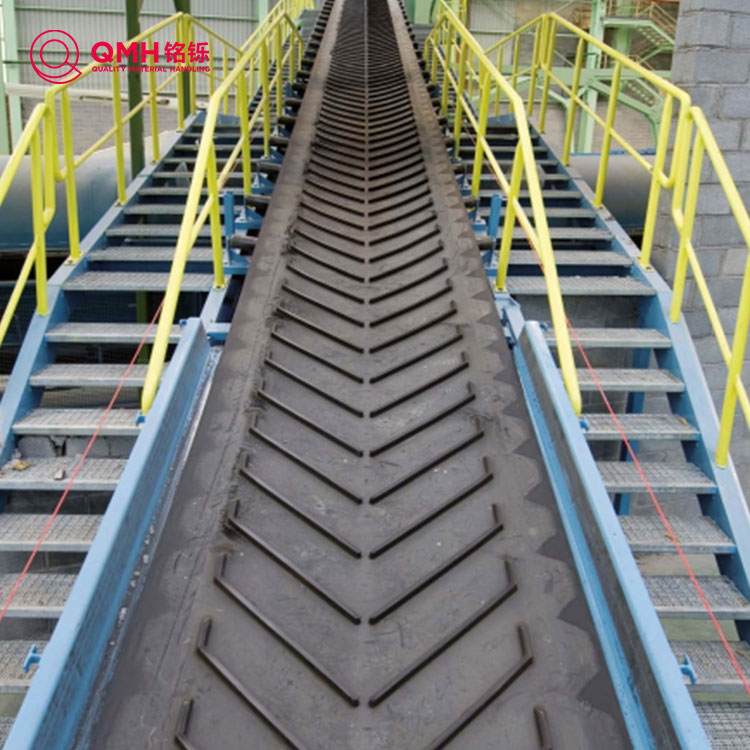
Chevron conveyor belts are specialized belts designed for inclined and steep-angle material transportation. These belts feature a V-shaped pattern (or similar profiles) along their surface to prevent materials from sliding backward. The design helps improve efficiency by enabling the transport of bulk materials at inclines of up to 45 degrees. Chevron belts are ideal for applications involving loose, granular, and powdery materials like sand, gravel, and grains.
Unlike traditional flat conveyor belts, Chevron belts are designed with increased sidewall profiles that allow for greater load-carrying capacity and reduce material slippage, making them essential for heavy-duty material handling in industries such as mining, construction, and agriculture. QMH offers high-performance Chevron belts tailored to meet the diverse needs of our clients.
Material handling processes often encounter several challenges that hinder productivity and efficiency. Understanding these pain points is crucial for selecting the right conveyor system.
These issues can be resolved with the right choice of conveyor belt, and Chevron belts, with their specialized design, are often the solution to these problems.
Chevron conveyor belts have several key design features that differentiate them from traditional belts and contribute to their effectiveness in material handling.
Choosing the right Chevron conveyor belt is essential for achieving maximum efficiency and minimizing downtime. Several factors should be considered during selection:
QMH provides professional consultation to help businesses select the most suitable Chevron conveyor belt for their specific needs, optimizing performance and cost-efficiency.
Chevron conveyor belts offer several advantages that make them ideal for challenging material handling tasks:
Chevron conveyor belts are versatile and used across various industries, including:
| Feature | Chevron Conveyor Belts | Flat Conveyor Belts |
|---|---|---|
| Design | V-shaped or raised profiles | Flat, smooth surface |
| Load Capacity | Higher, suitable for steep inclines | Standard, flat transport |
| Material Handling | Ideal for loose, granular, or bulky materials | Best for flat, packaged goods |
| Maintenance | Requires less maintenance under heavy use | More prone to wear and frequent maintenance |
| Common Applications | Mining, agriculture, recycling | Assembly lines, packaging |
What materials are suitable for Chevron conveyor belts?
Chevron conveyor belts are ideal for handling materials such as sand, gravel, grains, coal, and other bulk materials.
Can Chevron conveyor belts handle steep inclines?
Yes, Chevron belts are specifically designed to transport materials on inclined surfaces, often up to 45 degrees, without material slippage.
How do I choose the right Chevron belt for my system?
Selecting the right Chevron belt depends on factors like material type, incline angle, operating environment, and load requirements. Consult with QMH for tailored recommendations.
How durable are Chevron conveyor belts?
Chevron belts are built to last under heavy-duty conditions, with high resistance to wear, abrasion, and harsh environmental factors.
Chevron conveyor belts offer a robust and efficient solution for material handling tasks that involve steep inclines and bulk materials. Their unique design enhances load-carrying capacity, reduces maintenance, and improves transport efficiency. For businesses looking to improve their conveyor systems, choosing the right Chevron
Chevron conveyor belts offer a robust and efficient solution for material handling tasks that involve steep inclines and bulk materials. Their unique design enhances load-carrying capacity, reduces maintenance, and improves transport efficiency. For businesses looking to improve their conveyor systems, choosing the right Chevron belt is critical for operational success.
QMH specializes in providing high-quality Chevron conveyor belts that meet the demands of various industries. Whether you’re looking to upgrade your material handling system or need assistance in selecting the right belt, contact us today to discuss your needs and get personalized recommendations.


