Ceramic Pulley Lagging is a critical solution for conveyor systems operating under high load, wet, muddy, or abrasive conditions. By enhancing friction, reducing belt slippage, and extending pulley and belt service life, it directly addresses many operational pain points faced by bulk material handling industries. This article provides a structured and practical explanation of how Ceramic Pulley Lagging works, where it delivers the most value, and how to select the right configuration for long-term operational reliability.
Conveyor pulleys are subjected to continuous mechanical stress, environmental exposure, and material abrasion. Without proper surface protection, operators frequently encounter:
These issues are particularly common in mining, quarrying, cement, ports, and power generation facilities, where conveyor reliability directly impacts production continuity.
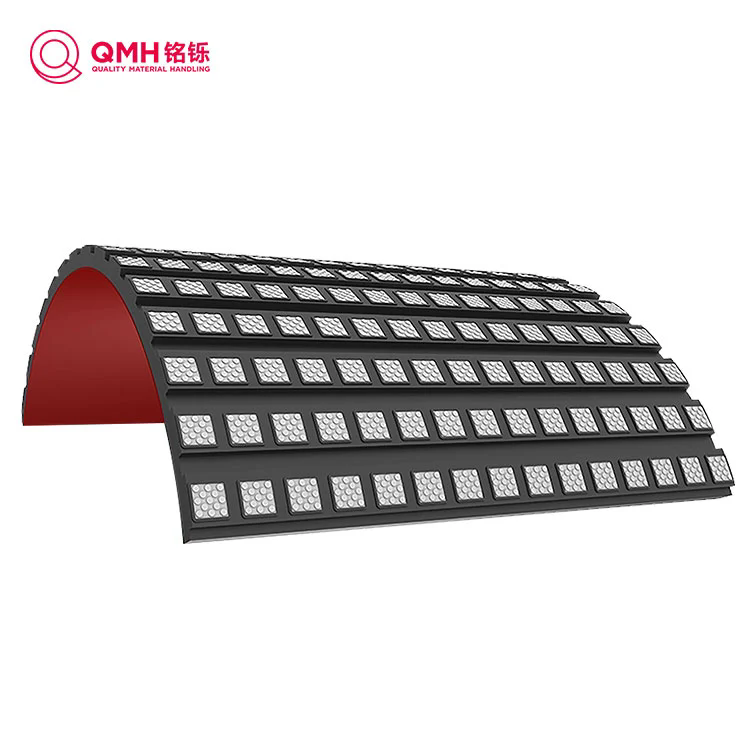
Ceramic Pulley Lagging is a pulley surface lining system composed of high-alumina ceramic tiles embedded in a resilient rubber matrix. The ceramic components provide extreme hardness and wear resistance, while the rubber layer absorbs impact and ensures secure bonding to the pulley surface.
This hybrid structure allows the lagging to maintain strong traction even in the presence of water, clay, or fine particles, making it especially effective in harsh operating conditions.
The performance advantage of Ceramic Pulley Lagging lies in its engineered surface geometry and material composition:
As a result, torque transmission is stabilized, belt tracking is improved, and slippage is significantly reduced, even under variable load conditions.
Ceramic Pulley Lagging is widely used in industries where conveyors operate under demanding conditions:
| Lagging Type | Traction Performance | Wear Resistance | Best Use Conditions |
|---|---|---|---|
| Plain Rubber Lagging | Moderate | Low to Medium | Dry, light-duty conveyors |
| Grooved Rubber Lagging | Medium | Medium | Occasionally wet environments |
| Ceramic Pulley Lagging | High | Very High | Heavy-duty, wet, abrasive conditions |
Choosing the right Ceramic Pulley Lagging requires evaluation of several operational parameters:
Professional installation is essential to ensure optimal bonding strength and long-term reliability. Companies like QMH focus on supplying Ceramic Pulley Lagging solutions engineered for demanding industrial applications and stable field performance.
Is Ceramic Pulley Lagging suitable for high-speed conveyors?
Yes. When properly designed and installed, it performs reliably on high-speed systems by maintaining stable friction and minimizing heat buildup.
Can Ceramic Pulley Lagging reduce belt replacement frequency?
By minimizing slippage and uneven wear, it significantly extends belt service life and reduces replacement intervals.
Does Ceramic Pulley Lagging require special maintenance?
Routine visual inspections are usually sufficient. Its wear-resistant surface requires less frequent maintenance compared to conventional rubber lagging.
Ceramic Pulley Lagging is a proven solution for improving conveyor efficiency, reliability, and operational safety in challenging environments. By addressing traction loss, wear, and downtime simultaneously, it delivers measurable long-term value for bulk material handling systems.
For engineered Ceramic Pulley Lagging solutions tailored to your conveyor conditions, QMH provides professional support and application expertise. If you are looking to enhance conveyor performance and reduce operating risks, contact us to discuss your project requirements and technical expectations.


