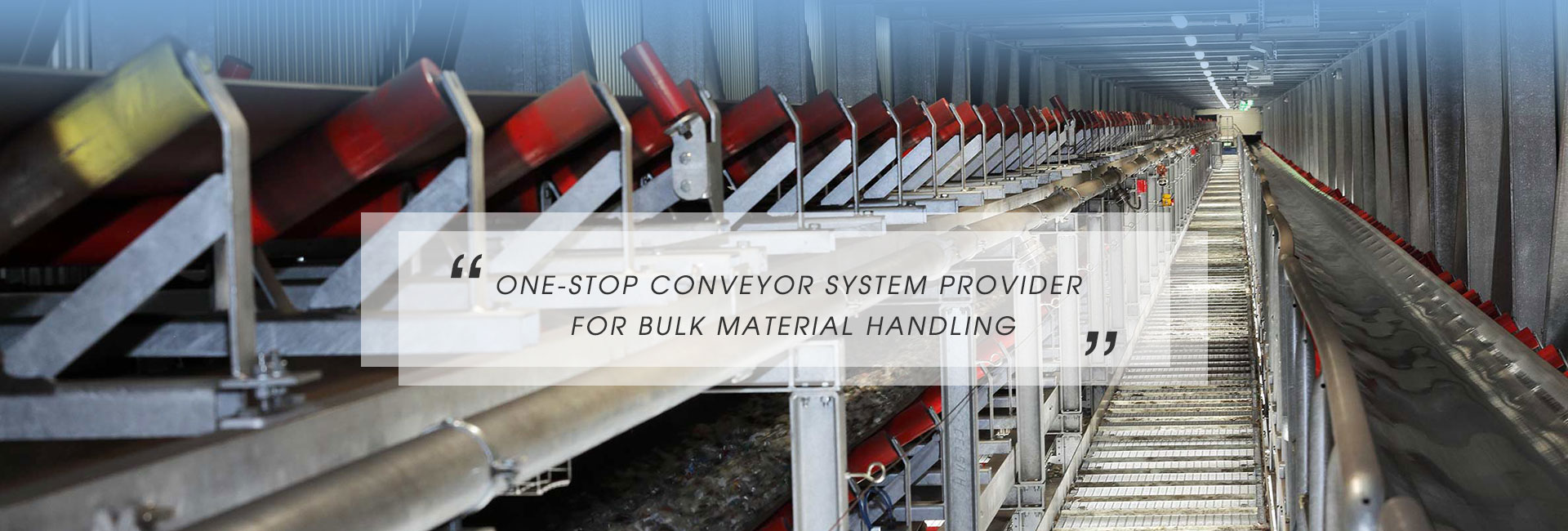
Aramid conveyor belts represent a cutting‑edge solution in industrial material handling, blending high tensile strength, lightweight design and exceptional performance across the toughest applications. From energy saving to environmental sustainability and industrial resilience, this article explores why aramid conveyor belts are increasingly preferred over traditional materials. We cover design features, advantages, uses, comparisons with other belt types, and detailed FAQs to help industry professionals make informed decisions.

An aramid conveyor belt is a type of reinforced conveyor belt where the carcass (internal tensile layer) is made from aramid fibers, such as para‑aramid (e.g., Kevlar® or Twaron®). These synthetic aromatic polyamide fibers are extremely strong yet lightweight, offering superior tensile strength with low elongation and excellent resistance to heat and chemicals compared to traditional materials.
Unlike conventional conveyor belt materials such as steel cord or fabric alone, aramid belts use a straight‑warp textile carcass that optimizes strength while reducing energy consumption and wear.
Aramid conveyor belts operate on the same basic principle as other belt conveyors: a continuous loop of belt material moves over pulleys and idlers to transport materials from one point to another. What distinguishes aramid belts is their reinforcement:
These properties combine to form a belt that is both robust in demanding environments and cost‑efficient in long‑term operation.
The choice of aramid conveyor belts is often driven by their performance advantages, especially in high‑stress industrial environments:
Aramid conveyor belts are most appropriate when:
Many industries use aramid conveyor belts due to their demanding operational needs:
| Feature | Aramid Conveyor Belt | Steel Cord Conveyor Belt | Fabric/Nylon Conveyor Belt |
|---|---|---|---|
| Tensile Strength | High (up to ~3150 N/mm) | Very High | Moderate |
| Weight | Low | High | Moderate |
| Energy Consumption | Low | Moderate | Moderate |
| Heat Resistance | High | Very High | Lower |
| Chemical Resistance | Excellent | Poor | Moderate |
| Lifespan | Long | Standard | Shorter |
Source: Industry research and technical comparisons.
What makes aramid conveyor belts stronger than traditional belts?
Aramid fibers have an exceptionally high strength‑to‑weight ratio that often exceeds steel at equivalent tensile strengths, resulting in more durable belts with lower weight and better performance.
How does using aramid conveyor belts save energy?
Because aramid belts are lighter, they reduce power draw from conveyor drives, lowering energy consumption and potentially reducing CO₂ emissions.
Are aramid belts suitable for high‑temperature environments?
Yes, aramid conveyor belts are highly heat resistant and can withstand continuous exposure to elevated temperatures better than many traditional fabric belts.
Can aramid conveyor belts reduce maintenance costs?
Their high resistance to wear, abrasion and fatigue means fewer belt replacements and less downtime, directly lowering maintenance costs.
What industries use aramid conveyor belts?
Industries such as mining, cement production, metallurgy, logistics and power generation use aramid conveyor belts for their robust performance under heavy loads and harsh conditions.


