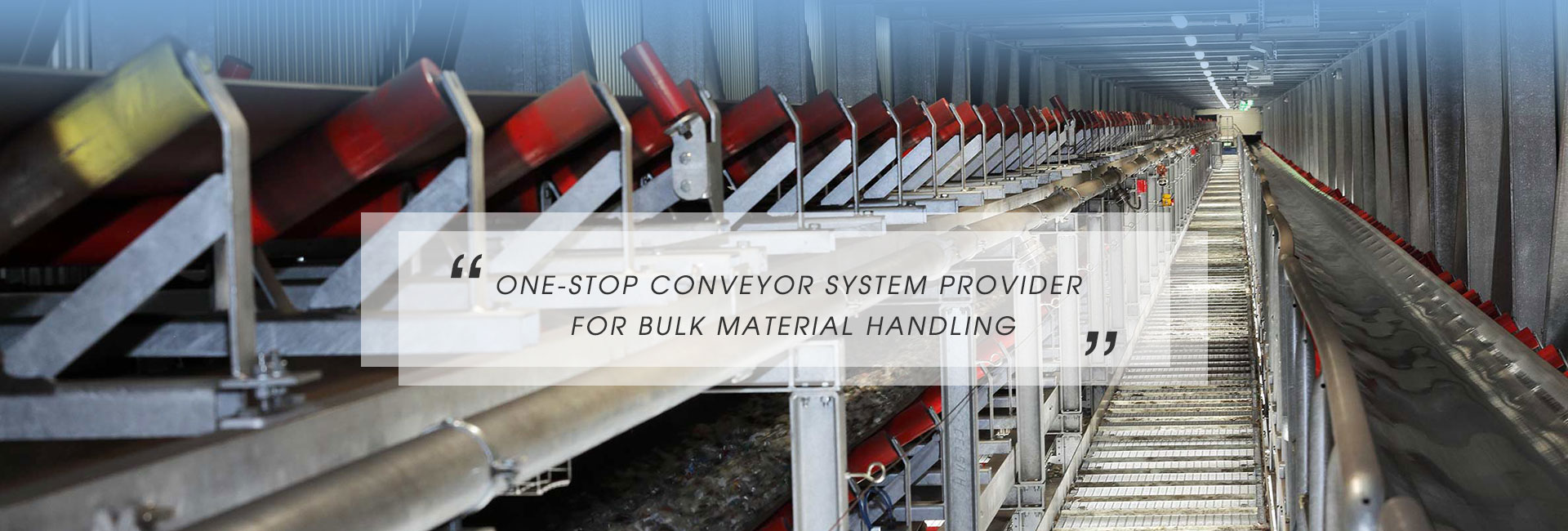
QMH Corrugated Sidewall Conveyor Belt technology is gaining attention as industries look for more efficient ways to move bulk materials through limited spaces and challenging environments. From mining sites to power plants, steep-angle transportation is becoming an important part of modern material handling development.
As industrial facilities expand and available land becomes more limited, traditional horizontal conveying layouts are not always practical. Long-distance transportation routes may require large installation areas, additional transfer points, and more complex maintenance planning.
Steep-angle conveying provides an alternative approach by allowing materials to move upward or through compact routes. However, transporting bulk materials at higher angles creates new technical challenges, including material sliding, overflow, belt stability, and continuous operation under heavy loads.
Industries such as mining, metallurgy, underground construction, ports, and power generation increasingly focus on improving transportation efficiency while reducing unnecessary infrastructure requirements. This trend has increased interest in specialized conveyor designs that can adapt to complex working conditions.
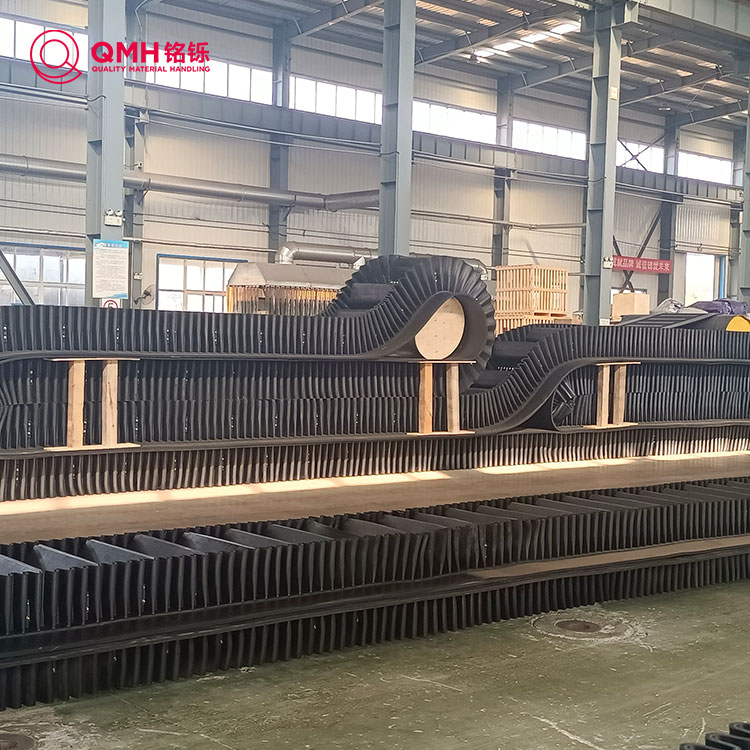
The main advantage of sidewall conveying technology is its ability to handle inclined transportation while maintaining stable material movement. The corrugated sidewall structure creates additional support along the belt edges, helping prevent materials from falling during steep-angle operation.
Compared with conventional flat conveyor systems, this type of design allows industries to explore more flexible installation layouts. It can reduce the need for multiple transfer points and help simplify transportation routes in areas where space is limited.
QMH has developed extensive experience in bulk material transportation through more than 30 years of technical practice. Its production capabilities cover steep sidewall products, steel cord conveyor belts, canvas belts, and related conveyor components designed for different industrial environments.
| Industry | Transportation Challenge | Role of Sidewall Conveying |
|---|---|---|
| Mining | Large volumes of heavy materials and complex terrain | Supports inclined transportation in limited areas |
| Underground Space | Restricted installation space | Helps create compact conveying routes |
| Power Plants | Continuous material movement requirements | Improves transportation stability |
| Ports | High-volume bulk handling | Supports efficient transfer operations |
| Metallurgy | Heavy loads and demanding conditions | Provides stronger material containment |
Modern conveyor technology is not only about moving materials faster. It also considers how equipment performs throughout its service life.
For steep-angle applications, several factors influence overall performance:
One of the biggest challenges in inclined transportation is keeping materials stable while the belt moves upward. Sidewalls and cleated structures help create a controlled transportation surface, reducing unnecessary material loss.
Industrial sites are rarely identical. A mining operation may face dust, vibration, and heavy impact, while a chemical facility may focus more on clean operation and material protection. Conveyor systems need to match actual working conditions rather than follow a single standard design.
Reducing unexpected downtime is a key concern for continuous industrial operations. Stable belt structures, suitable rubber compounds, and proper production processes can influence maintenance frequency and operating consistency.
QMH applies European-standard molds and production processes for steep sidewall systems. Its factory in Haiyang City, Yantai, covers approximately 20,000 square meters and includes mixing, calendering, laminating, and vulcanization production lines to support different product requirements.
Behind every conveyor system is a combination of material technology, manufacturing processes, and quality management.
QMH operates multiple production lines, including semi-finished product lines, finished sidewall vulcanization lines, steel cord conveyor belt lines, and specialized processing equipment. These facilities allow different conveyor products and components to be produced under controlled conditions.
The company has also been recognized as a national high-tech enterprise and smart factory demonstration enterprise, while participating in conveyor belt industry standard development and maintaining ISO three-system certification.
| Consideration | Why It Matters |
|---|---|
| Transport Angle | Determines whether traditional or specialized conveying methods are suitable |
| Material Characteristics | Affects belt structure, strength, and wear requirements |
| Operating Environment | Influences rubber selection and maintenance planning |
| Space Availability | Impacts system layout and installation approach |
| Running Time | Helps evaluate long-term stability needs |
The development of bulk material transportation is closely connected with efficiency and environmental considerations. Industries are increasingly looking for methods that reduce unnecessary transfer steps, optimize facility layouts, and improve resource utilization.
Steep-angle conveying technology supports this direction by offering more flexible transportation possibilities. In underground projects, it can help address space limitations. In surface operations, it can support more compact system designs and improve material flow management.
Another important trend is the combination of durable materials and intelligent production. Better manufacturing control helps improve consistency, while continuous design improvements allow conveyor systems to better match changing industrial requirements.
As industries continue to modernize their transportation processes, advanced belt structures will remain an important factor in improving bulk material handling performance. The growing application of QMH Corrugated Sidewall Conveyor Belt reflects the industry's move toward more adaptable and efficient conveying solutions.
The shift toward compact, reliable, and efficient transportation methods is reshaping how industries approach bulk material movement. From challenging mining environments to large-scale industrial facilities, steep-angle conveying provides new possibilities for improving transportation layouts and reducing operational challenges. With its technical experience and production capabilities, QMH continues to support this development through QMH Corrugated Sidewall Conveyor Belt solutions designed for modern material handling needs.


